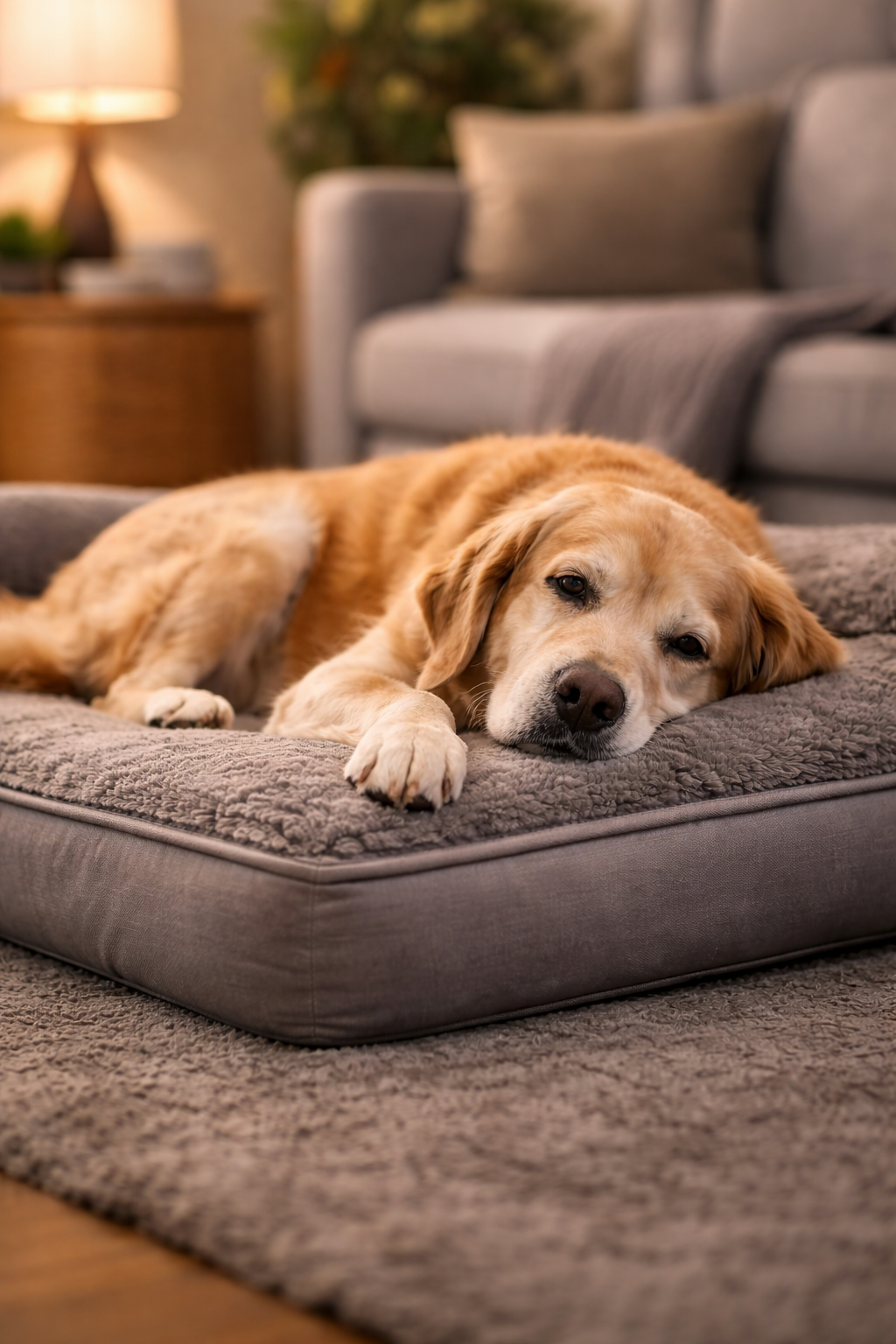
If there's one change you can make that will immediately improve your senior dog's quality of life, it's giving them the right bed. As dogs age, their joints deteriorate, their muscles thin, and the hard floor that they tolerated when young becomes genuinely painful. A good dog bed for an older dog isn't a luxury — it's a health tool.
Why Senior Dogs Need Different Beds
Arthritis affects the majority of dogs over seven years old, and even dogs who don't show obvious symptoms often have underlying joint changes that cause discomfort. Sleeping on a hard surface puts pressure on bony prominences — elbows, hips, shoulders — and can cause or worsen pressure sores in addition to joint pain.
Beyond joint support, older dogs often have reduced ability to regulate their body temperature, so warmth matters more. Beds with low step-over heights are important for dogs who struggle with mobility.
What to Look for in a Senior Dog Bed
- Orthopedic or memory foam construction — These materials distribute weight evenly, reducing pressure on joints. True orthopedic foam is dense and supportive, not simply soft. Cheaper beds advertised as "orthopedic" may compress completely under a dog's weight and offer no real benefit.
- Low sides or bolster design — A bed with low entry is easier for a dog with stiff joints to get in and out of.
- Removable, washable cover — Older dogs may have accidents, shed more, or drool more. Machine-washable covers that zip off easily are essential.
- Adequate size — Your dog should be able to stretch out completely.
- Non-slip bottom — A bed that slides when your dog tries to step in or out can cause falls. A rubber base is a safety feature that matters more for older, less steady dogs.
Types of Beds That Work Well for Older Dogs
Memory Foam Beds
Memory foam conforms to your dog's body shape, providing customized support at every pressure point. It's especially good for dogs with arthritis or recovering from surgery. Look for beds with at least 3–4 inches of dense memory foam base.
Orthopedic Bolster Beds
These combine firm foam support with raised edges that give dogs a headrest and something to lean against — which many older dogs instinctively prefer. The bolster design also helps with temperature regulation by surrounding the dog in soft walls that retain warmth.
Heated Dog Beds
For dogs with significant joint stiffness, gentle heat can be genuinely therapeutic. Heated dog beds — most use low-wattage self-warming technology with auto shutoffs — can reduce morning stiffness and help cold-sensitive senior dogs sleep more comfortably through winter.
Raised/Elevated Cot-Style Beds
Some older dogs do better on elevated cot-style beds that sit 6–8 inches off the floor. These keep dogs off cold surfaces, provide airflow, and some dogs find it easier to rise from them. These work best for dogs without significant mobility limitations.
Placement and Warmth
Where you put the bed matters as much as the bed itself. Avoid cold floors near exterior walls or drafty areas. Place the bed in a room where your dog spends time near people — senior dogs especially benefit from proximity and reassurance.
A quality bed for your senior dog may cost more than you're used to spending on pet accessories, but the improvement in their comfort and sleep quality is visible — and entirely worth it. Your dog has given you years of loyalty. A soft, supportive place to rest is a small way to give something back.