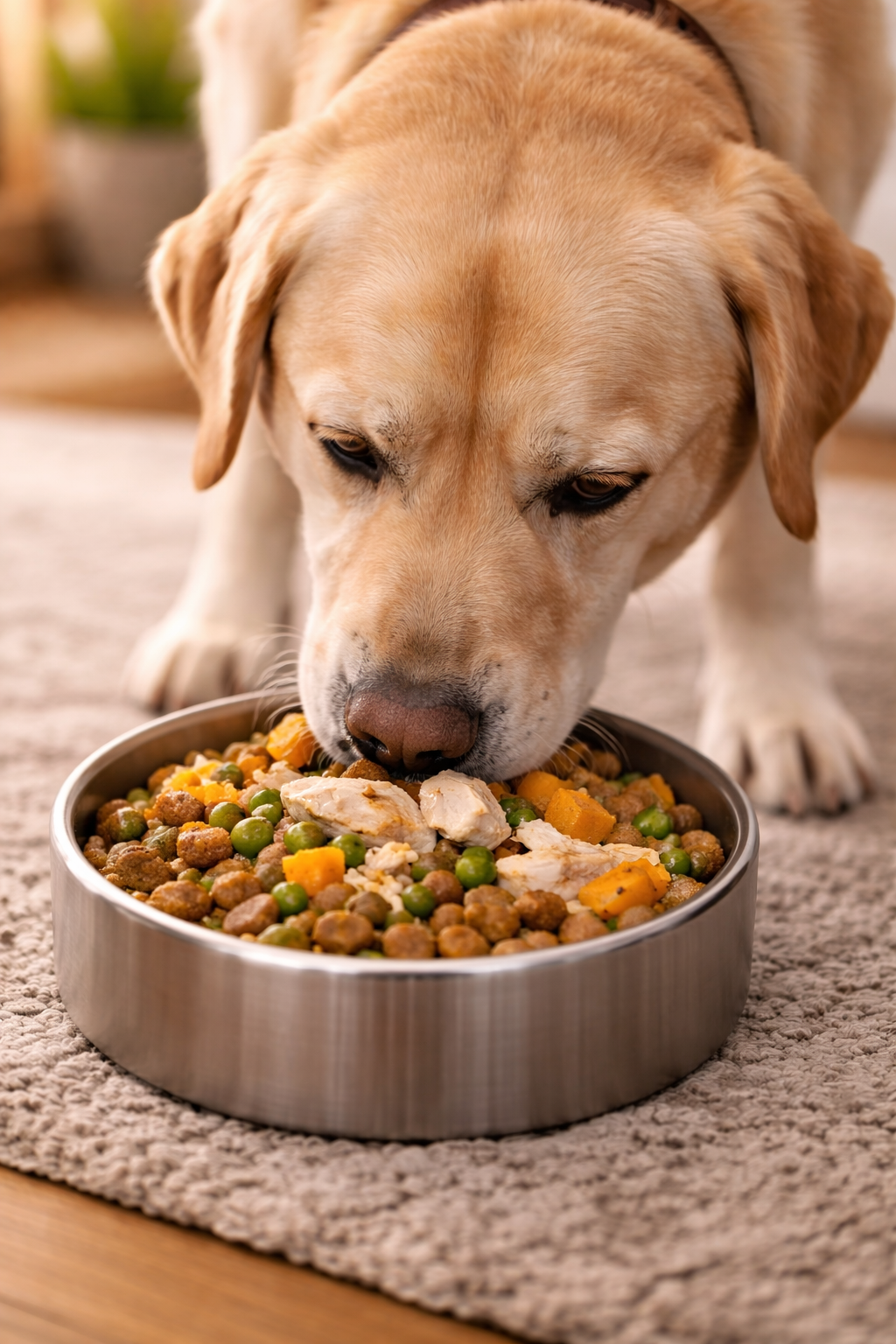
A dog with a sensitive stomach is a dog whose digestive system reacts to things other dogs handle without issue — certain proteins, common food additives, high-fat content, or specific grains. The signs are familiar to many owners: soft stools, frequent vomiting, excessive gas, or a dog who simply seems uncomfortable after eating. The good news is that the right food very often resolves all of these issues.
First: Rule Out True Food Allergy
There's an important distinction between food sensitivity (a digestive intolerance) and true food allergy (an immune system reaction). Food allergies in dogs typically present with skin symptoms — itching, ear infections, paw licking — as well as GI issues.
If your dog has both GI symptoms and chronic skin problems, a food allergy elimination diet supervised by your vet may be needed to identify the specific culprit protein.
Ingredients to Avoid for Sensitive Dogs
- High-fat content — Fat takes longer to digest and is the most common trigger for soft stools and vomiting in sensitive dogs. Look for foods with moderate fat percentages (typically 8–15% on a dry matter basis).
- Artificial additives — Artificial colors, flavors, and preservatives add no nutritional value and can irritate sensitive digestive systems.
- Common allergen proteins — Beef, chicken, dairy, wheat, and corn are the most frequent dietary allergens in dogs.
- Excessive fermentable fiber — Certain legumes can cause excessive gas in sensitive dogs.
What to Look for in Food for Sensitive Dogs
- Single-source protein — Foods with one clearly identified protein source are easier to trace if problems develop.
- Novel protein sources — If your dog has reacted to common proteins, try a food with a protein they've never eaten before: duck, venison, rabbit, salmon, or kangaroo.
- Limited ingredients — Limited-ingredient diets (LIDs) contain fewer components, making it easier to identify what's causing a reaction.
- Easily digestible carbohydrates — White rice, sweet potato, and pumpkin are particularly gentle on sensitive stomachs.
- Probiotic support — Foods or supplements containing probiotics can help stabilize the gut microbiome and improve digestion.
Prescription Gastrointestinal Diets
For dogs with significant GI issues — chronic vomiting, diarrhea, or diagnosed inflammatory bowel disease — veterinary prescription gastrointestinal diets from brands like Hill's, Royal Canin, or Purina Pro Plan Veterinary can make a dramatic difference. These are specifically formulated with highly digestible ingredients and precise nutrient balancing.
How to Transition Food for a Sensitive Dog
The transition matters as much as the food itself. Always transition gradually:
- Days 1–3: 75% old food, 25% new food
- Days 4–6: 50% old food, 50% new food
- Days 7–9: 25% old food, 75% new food
- Day 10+: 100% new food
If your dog shows symptoms during the transition, slow it further — take 2–3 weeks rather than 10 days. Patience here pays dividends.
Food is one of the most powerful tools you have for your dog's health. For sensitive dogs especially, the right diet isn't just comfortable — it's transformative. Work with your vet to find what your individual dog thrives on, and don't be discouraged if the first food you try isn't the perfect fit. It often takes one or two adjustments to find the right match.