Cats have a reputation. They're independent, mysterious, and — according to a popular narrative — basically indifferent to the humans they live with. But anyone who has lived closely with a cat knows that something deeper is happening. The question is: what exactly?
Science has been catching up with what cat lovers have felt all along, and the evidence is increasingly clear: cats form genuine emotional bonds with their owners.
What Research Actually Shows
A landmark study published in Current Biology in 2019 found that cats display "secure attachment" to their owners — the same attachment pattern seen in human infants bonding with caregivers. When placed in an unfamiliar room with their owner and then temporarily left alone, securely attached cats explored confidently when the owner was present, showed stress when they left, and calmed quickly when they returned.
About 65% of cats showed this secure attachment pattern — remarkably close to the rate seen in human infants (65–75%). This isn't affection by accident. This is a genuine emotional bond.
How Cats Show Love (It's Subtle)
The key is recognizing that a cat's emotional vocabulary is different from a dog's. Their expressions of affection are quieter — and if you're not watching for them, you'll miss them.
- Slow blinking — A slow, relaxed blink directed at you is a cat's way of saying "I trust you completely." Slow-blink back and many cats will return it.
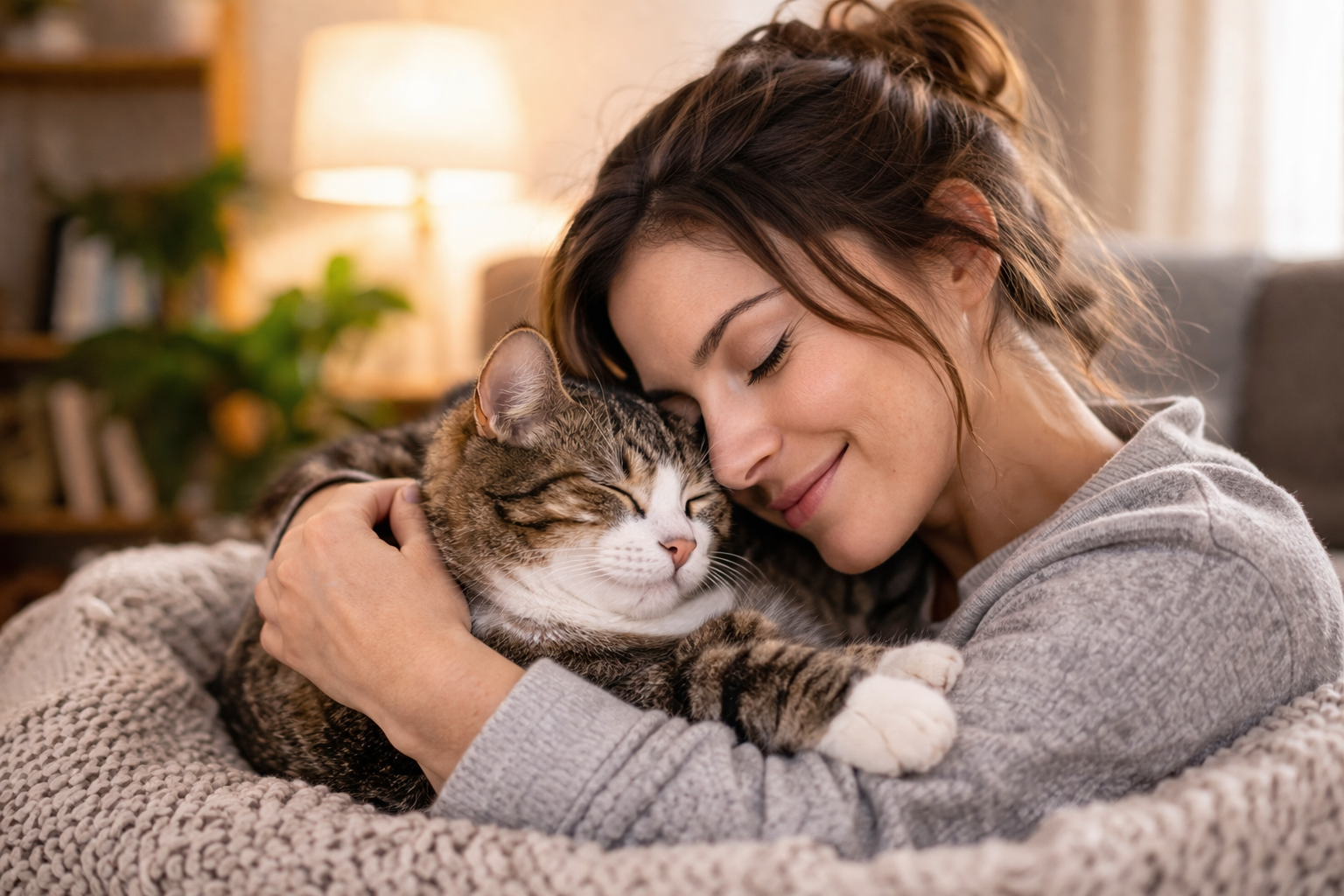
- Bunting (head butting) — When your cat presses their head against your hand or face, they're depositing their scent on you — marking you as someone who belongs to them.
- Sitting near you — Cats don't have to be in your lap to be showing affection. Simply choosing to be in the same room is a statement of comfort and closeness.
- Kneading — Cats knead when they feel safe, content, and emotionally secure — and they often do it specifically on or near the people they love.
- Trilling and chirping — Cats develop a specific vocal vocabulary with their owners they don't use with other cats. Those small trills are often greetings directed specifically at you.
Why Cats Seem More Independent
Unlike dogs, who evolved in packs and are instinctively social, cats evolved as solitary hunters. This means their social wiring is different — not absent, just structured differently.
A cat choosing to be near you is a bigger statement than a dog doing the same thing, precisely because solitude comes naturally to cats. When your cat decides your company is better than their own, that's a meaningful choice.
Cats Miss Their Owners
Studies measuring cortisol (a stress hormone) in cats have found elevated levels when owners are absent for extended periods. And in multiple owner surveys, the vast majority of cat owners report clear behavioral changes when they return after time away: more vocalization, more contact-seeking, and a general shift in the cat's demeanor.
Cats notice when you're gone. And they're glad when you come back.
The Bond Is Real — Just On Cat Terms
The mistake most people make is expecting cat love to look the way dog love looks — enthusiastic, demonstrative, and impossible to ignore. Cat love is quieter. It lives in the slow blink across the room, in the choice to sleep beside you, in the small chirp when you come through the door.
Once you understand the language, it's everywhere.