Anxiety in dogs is far more common than most people realize — and far more distressing for the dog than it might appear from the outside. A dog who paces, pants excessively, destroys furniture, or trembles during storms is not being difficult. They're genuinely scared, and they're struggling to cope. The good news is that anxiety in dogs is very manageable with the right approach.
Identify What Triggers the Anxiety
Before you can address dog anxiety, you need to understand what's causing it. Common triggers include:
- Separation — the most common form, triggered when the dog is left alone
- Noise — thunderstorms, fireworks, construction, traffic
- New environments or changes — moving, visitors, new pets
- Social anxiety — discomfort around strangers or other animals
- Past trauma — especially common in rescue dogs
A clear picture of what triggers your dog's anxiety makes every other strategy more effective.
Create a Safe Space
Every anxious dog benefits from having a dedicated "safe zone" — a quiet, enclosed space that belongs to them and feels secure. This might be a crate with a cover and soft bedding, or a calm corner with their bed and familiar toys.
The key is consistency: this space is always available, always comfortable, and never associated with punishment.
Desensitization and Counterconditioning
For specific triggers, gradual desensitization is one of the most effective long-term strategies. Expose your dog to the anxiety trigger at such a low level that it doesn't cause fear, then pair that exposure with something positive — a high-value treat, a favorite toy, calm praise.
For example, if your dog is afraid of thunderstorms, start by playing storm sounds at very low volume while feeding them dinner. Over many sessions, gradually increase the volume. Over time, the sound that used to trigger panic becomes associated with good things. This process works best over weeks or months, not days.
Physical Comfort and Touch
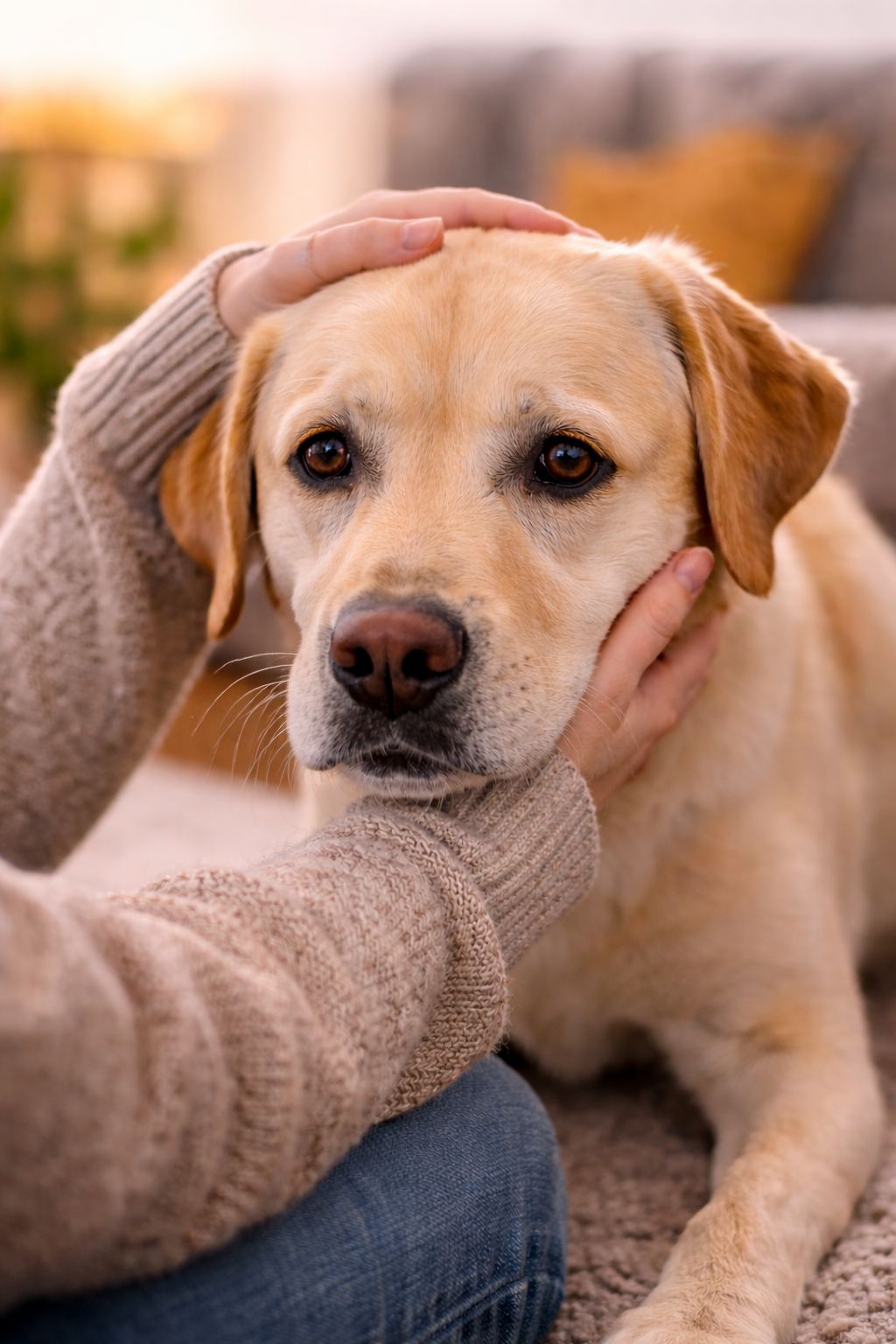
Calm, slow physical contact is genuinely soothing for anxious dogs. Long, steady strokes down the back — moving in one direction — tend to be more calming than vigorous petting. Pressure wraps (like the ThunderShirt) work for some dogs by providing constant, gentle pressure, similar to swaddling an infant.
Exercise and Mental Stimulation
A well-exercised dog is a calmer dog. Physical exercise reduces baseline anxiety by burning off excess energy and releasing calming neurochemicals. Puzzle toys, sniff walks, and training sessions also reduce anxiety by engaging the mind and giving your dog a sense of purpose.
For dogs with separation anxiety, a long walk or vigorous play session before you leave can meaningfully reduce the intensity of their distress.
Calming Supplements and Medication
For dogs with moderate to severe anxiety, natural supplements or veterinary medications may be appropriate. Natural options include:
- L-theanine and melatonin — available in calming treats and supplements
- Adaptil (DAP) — a synthetic pheromone product available as a diffuser, collar, or spray
- Zylkene — a milk-derived supplement with calming properties
For severe anxiety, veterinary-prescribed medications such as trazodone, fluoxetine, or clomipramine can be life-changing. These aren't last resorts — they're medical tools that help a dog's nervous system reach a baseline where they can actually learn to cope.
An anxious dog isn't a problem to fix — they're a dog who needs understanding and support. With the right combination of environment, training, and care, most anxious dogs can reach a place of genuine calm.