You're reading, cooking, watching TV — and you feel it. That steady, unblinking gaze from your dog. You look up, make eye contact, and they just... keep staring. It can feel almost unnerving until you understand what's behind it. Because the reason dogs stare at their owners is, in most cases, one of the most beautiful things in the human-animal relationship.
It's How They Say "I Love You"
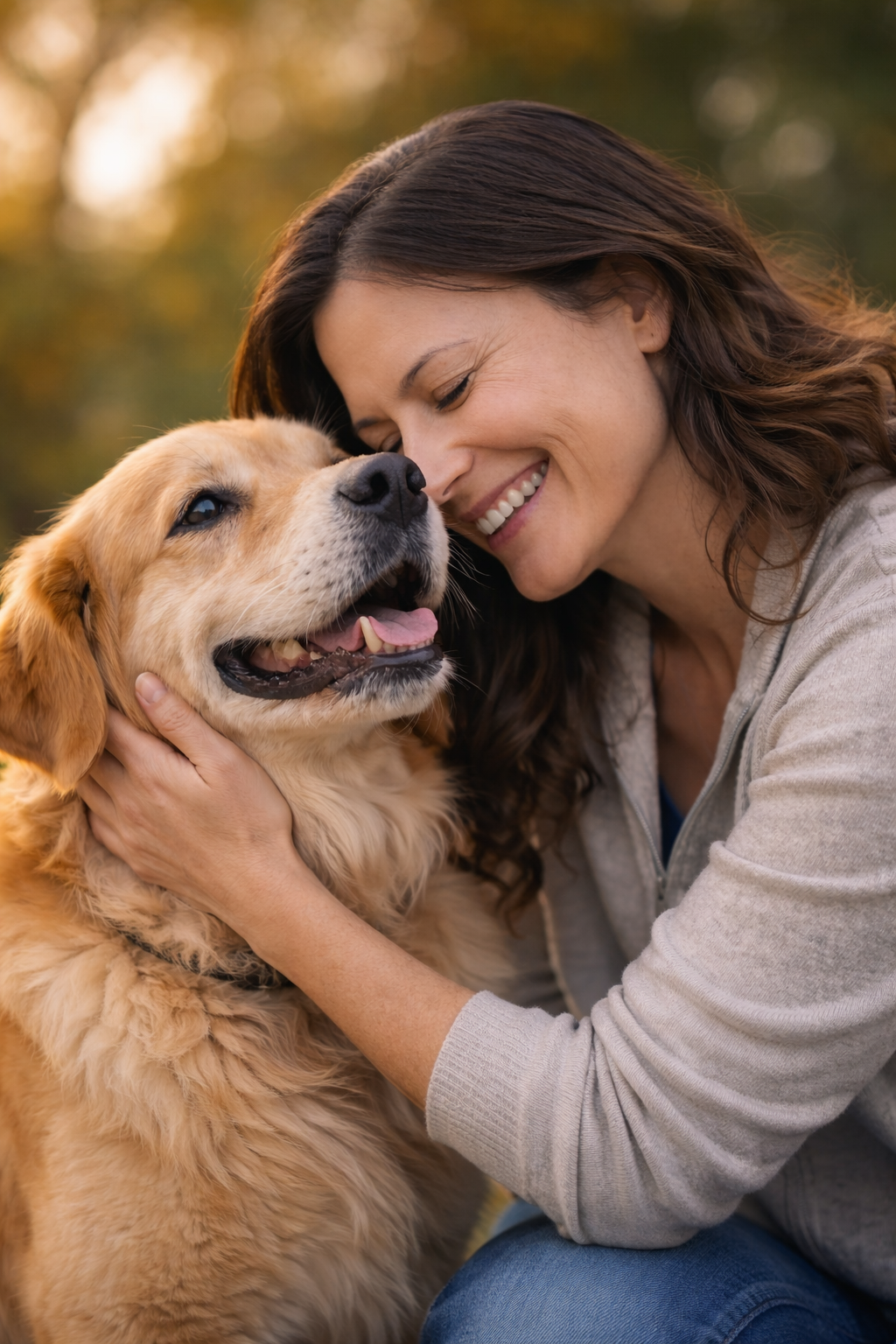
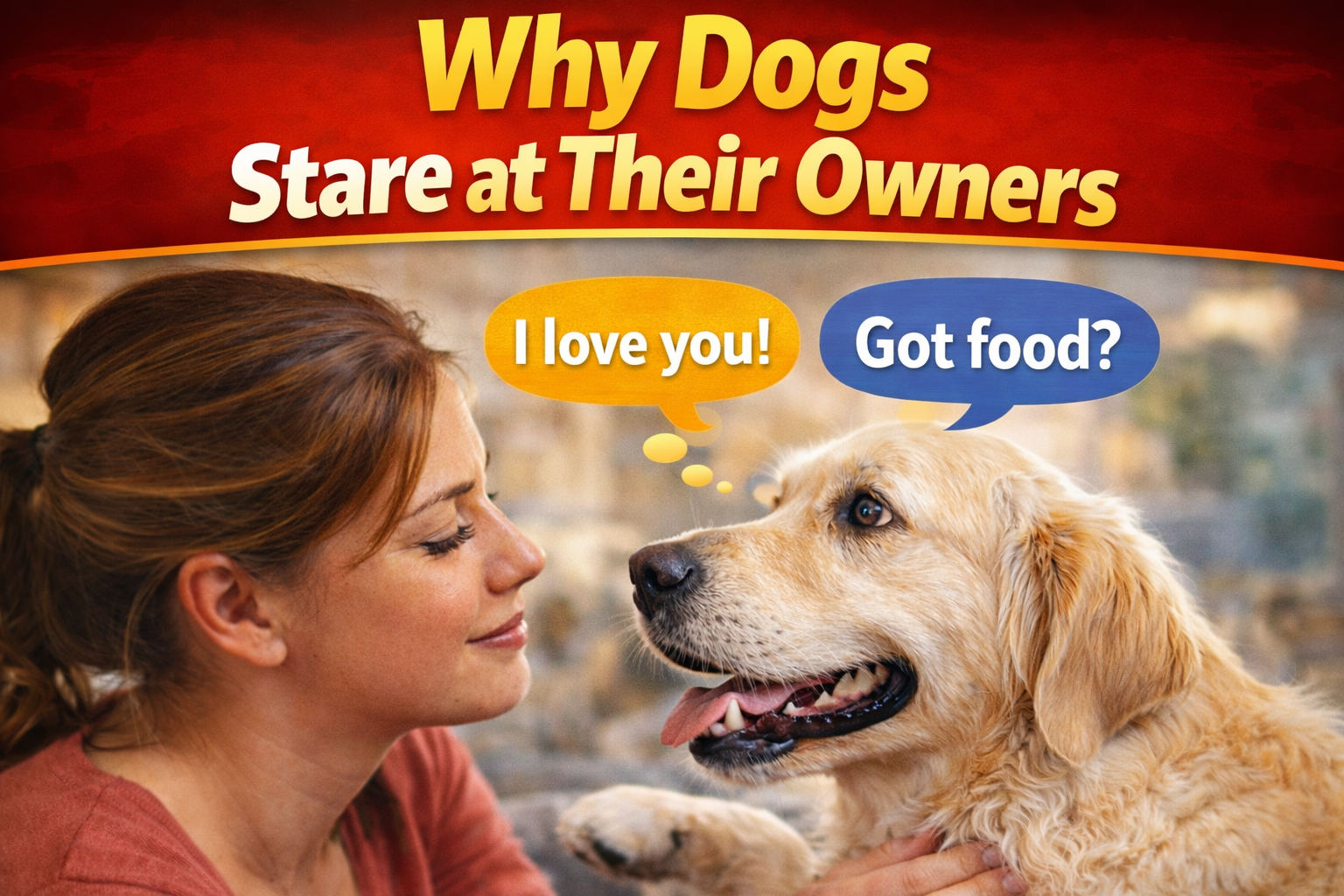
When a dog stares at you with soft, relaxed eyes — no tension in their body, tail perhaps slowly moving — they are expressing affection and connection. Scientists have measured this directly: mutual gazing between a dog and their owner triggers a release of oxytocin in both the dog and the human. Oxytocin is the bonding hormone — the same chemical released between mothers and their newborns, and between people in loving relationships.
Your dog isn't just looking at you. They're bonding with you. Every time you meet that gaze warmly, you're deepening the connection.
They're Reading Your Face
Dogs are remarkably good at reading human facial expressions — better than any other animal species. Research has found that dogs can distinguish between happy, angry, sad, and surprised human faces, and they respond to these expressions in meaningful ways.
When your dog stares at you, part of what they're doing is scanning your face for emotional information. Are you happy? Tense? About to do something interesting? Your dog is paying close attention, building a real-time model of your mood.
They Want Something (and They Know Staring Works)
Sometimes a dog stares because they've learned it produces results. They stare at you during dinner and eventually get a bite. They stare when they want a walk and eventually the leash gets picked up. Dogs learn quickly that sustained eye contact from a creature with adorable eyes tends to work on humans. This doesn't mean it's cynical — it means your dog has learned that communicating with you gets results.
They're Asking for Direction
Well-socialized dogs often stare at their owners when they're uncertain about a situation — when encountering something unfamiliar, or when they don't know what behavior is expected. This "checking in" is a sign of a good owner-dog relationship. Your dog trusts your judgment, and in uncertain moments, they look to you for guidance.
When Staring Is Not Affectionate
Not all staring is loving. A hard, tense stare — combined with a stiff body, raised hackles, or a low growl — is a warning. This type of stare is directed at perceived threats, not beloved owners. The difference is obvious in the body: a loving gaze comes with a relaxed body; a warning stare comes with tension throughout.
The next time your dog looks up at you with that long, quiet gaze, look back. Soften your eyes. They're saying something real — and the best response is simply to be there, looking back at them with the same warmth they're giving you.