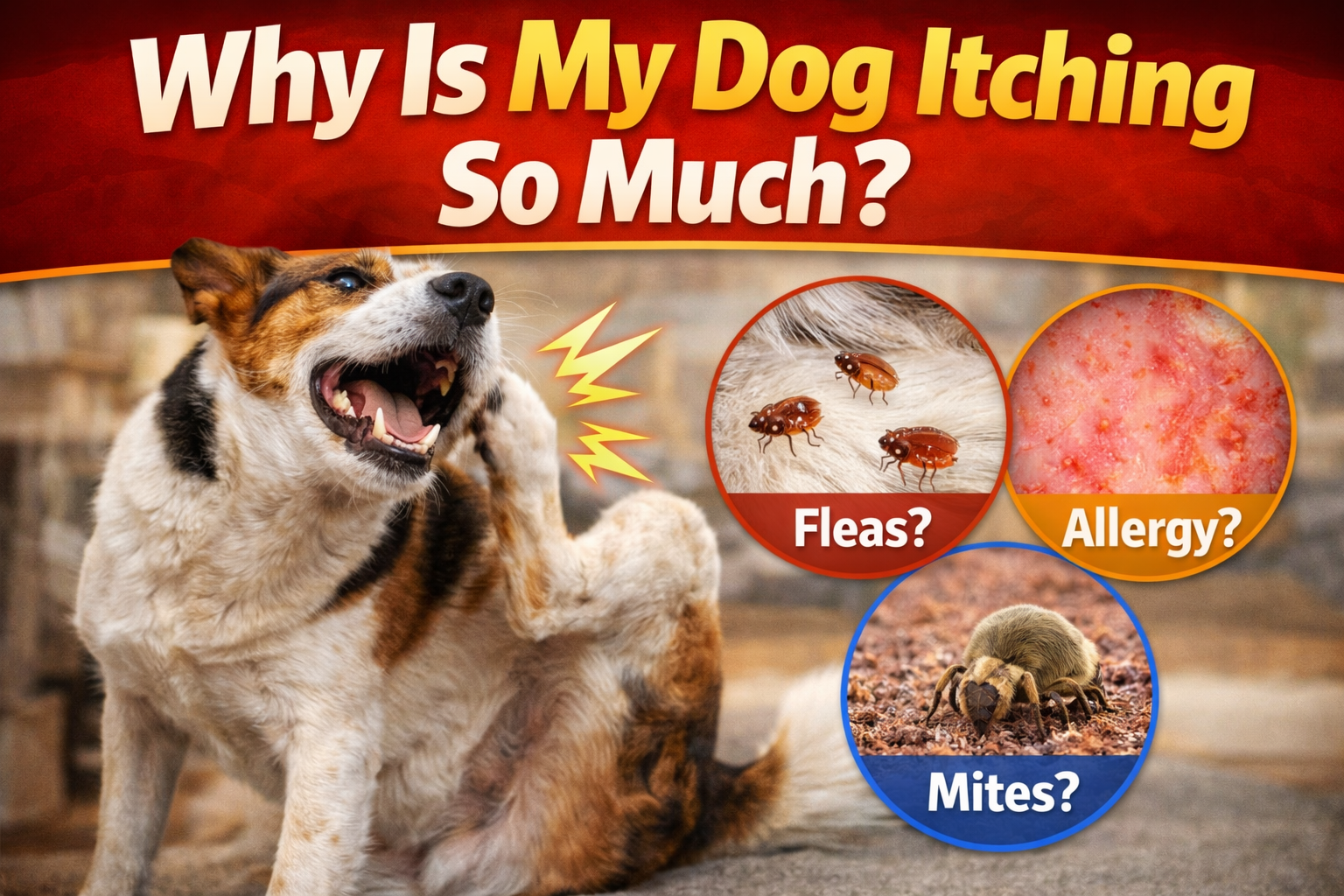
Watching your dog scratch themselves relentlessly is uncomfortable to witness — and genuinely uncomfortable for them to experience. Occasional itching is normal for any dog, but when the scratching, biting, and rubbing becomes constant, it's telling you something. Understanding the most common causes can help you get to the bottom of it faster and find real relief for your dog.
Environmental Allergies (Atopy)
Environmental allergies are one of the most common causes of chronic itching in dogs. Just like humans allergic to pollen, mold, or dust mites, dogs can develop sensitivities to the same environmental triggers. This condition is called atopy or atopic dermatitis.
The itching from environmental allergies tends to be seasonal at first — worse in spring and fall — but can become year-round as the allergy progresses. Common signs include:
- Itching focused on the paws, belly, groin, armpits, and face
- Red, inflamed skin in these areas
- Recurrent ear infections
- Watery eyes or sneezing in some dogs
Your veterinarian can perform allergy testing and recommend treatments ranging from antihistamines and omega-3 supplements to prescription medications like Apoquel or Cytopoint.
Food Sensitivities
Food allergies or sensitivities are another significant cause of chronic itching. The most common culprits are proteins — beef, chicken, dairy, and wheat. Unlike environmental allergies, food-related itching occurs year-round without a seasonal pattern.
The only reliable way to identify a food allergy is a veterinary-supervised elimination diet — feeding your dog a novel protein source for 8 to 12 weeks. If itching improves significantly, a food allergy is likely.
Fleas and Flea Allergy Dermatitis
A single flea bite can trigger an intense allergic reaction in sensitive dogs. You don't have to see fleas on your dog — a dog with flea allergy dermatitis may scratch furiously after just one or two bites. Look for itching concentrated at the base of the tail, lower back, and thighs, plus small red bumps or "flea dirt" in the coat.
Dry Skin
Dry skin — particularly common in winter when indoor heating lowers humidity — can cause significant itching without any allergic component. Signs include white flakes in the coat (dandruff), dull fur, and generalized scratching. Adding fish oil (omega-3 fatty acids) to your dog's diet can significantly improve skin moisture.
Skin Infections (Bacterial or Yeast)
Sometimes the itching itself creates the infection: a dog who scratches breaks the skin barrier, allowing bacteria or yeast to establish. Yeast dermatitis causes intense itching and has a distinct musty or "corn chip" smell. Infected skin may appear red, greasy, or darkened with small bumps or scaling.
Bacterial and yeast infections require veterinary treatment — typically antifungal or antibiotic medications plus medicated shampoos.
Excessive itching in dogs is rarely just "one of those things" — there's almost always an identifiable cause, and most causes are very treatable. If your dog has been scratching for more than a week or two, or if their skin is red, broken, or odorous, it's time to see a vet.