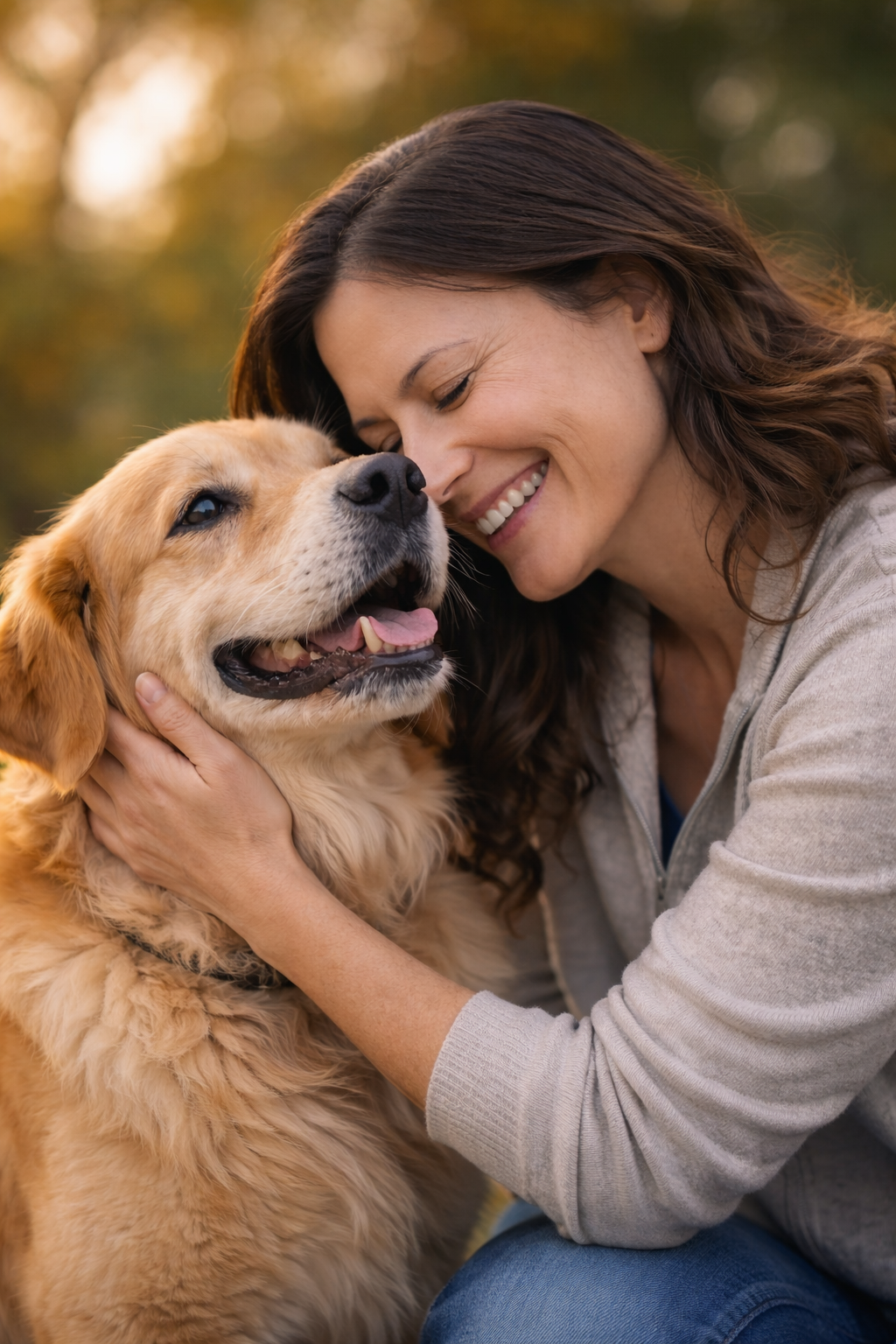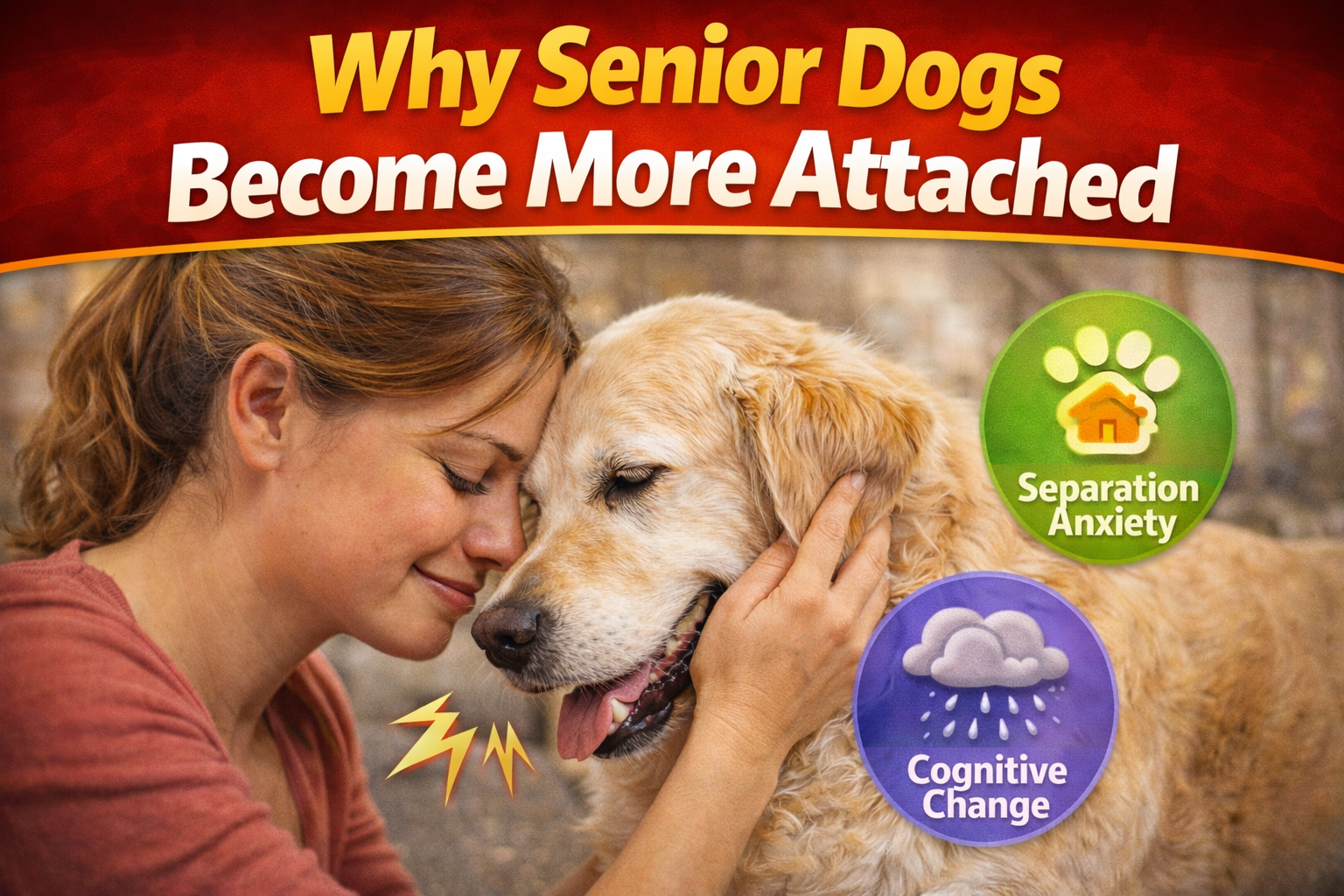
If you've noticed your aging dog becoming more attached to you — following you more closely, wanting to be held, seeking your presence in ways they didn't when they were younger — you're not imagining it. This is one of the most consistent and quietly touching patterns in the lives of older dogs.
Understanding why it happens helps you meet your senior dog's needs with the patience and tenderness they deserve.
Their World Is Becoming Smaller
Aging changes a dog's senses gradually but significantly. Hearing often declines first. Vision can cloud with cataracts. The sense of smell — how dogs navigate much of their world — may also dull over time.
As the world becomes harder to process through their senses, dogs rely more heavily on what they can trust: you. Your scent, your warmth, your voice, and your presence become anchor points in a world that's becoming quieter and less distinct. Staying close to you is a form of stability.
Canine Cognitive Dysfunction
Older dogs can develop Canine Cognitive Dysfunction (CCD), sometimes compared to dementia in humans. Dogs with CCD may become disoriented, anxious at night, or confused in familiar environments. One of the most common behavioral changes is increased attachment — seeking their owner as a source of reassurance.
Signs that CCD may be a factor include:
- Wandering or pacing, especially at night
- Staring blankly at walls or into space
- Getting "stuck" in corners or behind furniture
- Forgetting house training
- Appearing lost in familiar places
- Sleeping more during the day, restless at night
If you recognize several of these signs alongside increased clinginess, speak with your veterinarian. There are management strategies and medications that can meaningfully improve quality of life.
Pain and Physical Discomfort
Arthritis, joint pain, and other age-related physical conditions are very common in senior dogs. A dog in pain or discomfort naturally seeks comfort — and the person who provides comfort is you. Increased closeness may be your dog's way of saying: I don't feel well, and I need you near.
Watch for other signs of physical discomfort alongside clingy behavior: reluctance to climb stairs, difficulty standing after rest, or yelping when touched.
Their Daily World Has Changed
Senior dogs often become less engaged with the world outside — fewer intense play sessions, shorter walks, less interest in chasing squirrels. As their external world contracts, the relationship with you becomes proportionally more central. You are their primary source of enrichment, comfort, and connection.
This isn't sad. It's a natural deepening of the bond that has built over years.
How to Support an Attached Senior Dog
- Create comfortable resting spots near you — orthopedic beds placed where you spend time give closeness without requiring them to follow you everywhere
- Maintain gentle physical contact — slow, gentle stroking has measurable stress-reducing effects on dogs
- Keep routines consistent — senior dogs, especially those with cognitive decline, benefit enormously from predictability
- Schedule regular vet checkups — senior dogs benefit from veterinary monitoring every six months
Your senior dog's increased attachment is the final expression of a lifetime of love. They've chosen you as their comfort, their anchor, and their person. Being that for them, during this slower chapter, is one of the most meaningful things you'll ever do.